

Disc injury resource
Herniated Disc and Disc Injury Care in Miami Lakes
Disc-related symptoms can involve the back or neck and may travel into an arm or leg. Learn what common terms mean and why imaging findings must be considered together with symptoms and an individual evaluation.
Clear overview
Understanding Disc Injuries
Intervertebral discs sit between the vertebrae and help the spine absorb load and move. A disc may bulge, protrude, or herniate when part of the disc extends beyond its usual boundary. These terms describe structure; they do not tell the whole story about a person's pain.
Some disc changes produce no symptoms. When a disc irritates or compresses a nearby nerve, symptoms may include radiating pain, tingling, numbness, or weakness in an arm or leg. The location of symptoms often depends on whether the affected area is in the neck or lower back.
Patterns to discuss
Common Symptoms and Patterns
These patterns are not a self-diagnosis tool. An individual evaluation can help determine what they may mean in context.
- Localized neck or back pain
- Pain that travels into an arm, buttock, or leg
- Tingling or numbness in a hand, foot, arm, or leg
- Weakness in part of an arm or leg
- Symptoms affected by sitting, standing, coughing, or certain movements
- Reduced comfort with bending, lifting, or twisting
- Bladder, bowel, saddle-sensation, or rapidly progressive weakness symptoms that require urgent care
Possible contributors
What Can Contribute to Disc-Related Symptoms?
A single movement may trigger symptoms even when changes have been developing gradually.
Age-related wear and repetitive loading
Lifting, twisting, trauma, or other spinal conditions
Symptoms after a single movement when changes developed gradually
Muscle, joint, nerve, vascular, or medical conditions that can imitate a disc pattern
Personalized next steps
Why an Individual Evaluation Matters
Similar symptoms can come from different tissues, joints, nerves, injuries, or health conditions. An evaluation begins with a conversation about your health history, how the concern began, what makes it better or worse, and how it is affecting daily movement. A physical examination may be appropriate, and other testing or referral may be recommended when clinically indicated.
The purpose is to understand whether chiropractic care may be appropriate for your situation and to identify circumstances that require another type of medical evaluation. Recommendations should be personalized rather than based only on a symptom name.
For possible disc-related symptoms, the evaluation may consider pain location, radiating symptoms, changes in strength or sensation, movement tolerance, injury history, warning signs, and any existing imaging. Testing or referral may be recommended when it is likely to change the care plan or when the presentation falls outside appropriate chiropractic management.
Care considerations
How Chiropractic Care May Fit Into Your Next Step
For some patients with an appropriate musculoskeletal disc presentation, chiropractic care may be considered as a conservative option. Any hands-on approach should be selected carefully, adapted to the patient's findings and comfort, and reassessed based on response. Do not expect every disc to be “put back” into place or chiropractic care to guarantee avoidance of surgery.
Common questions
Questions About Herniated Disc and Disc Injury Care in Miami Lakes
Are a bulging disc and a herniated disc the same?
The terms describe different patterns of disc material extending beyond its usual boundary. The terminology and clinical importance depend on the specific finding. A healthcare professional can explain how an imaging report relates to symptoms and examination findings.
Can someone have a herniated disc without pain?
Yes. Some people have disc changes on imaging without corresponding symptoms. An imaging result should not be treated as a diagnosis of the pain source by itself.
Can a lower-back disc injury cause leg pain?
It can. Irritation of a nerve root in the lower back may contribute to pain, tingling, numbness, or weakness that travels into a leg. Other conditions can produce similar symptoms.
Does every suspected disc injury require an MRI?
No. Imaging decisions depend on the history, examination, warning signs, and whether imaging is likely to change care. The clinic should not promise or order testing from website copy alone.
Sources and Medical References
These references provide additional context for the information on this page.
A clear next step
Ready to Discuss What You Are Experiencing?
Send an appointment request or call the office to discuss your concerns and available appointment times.
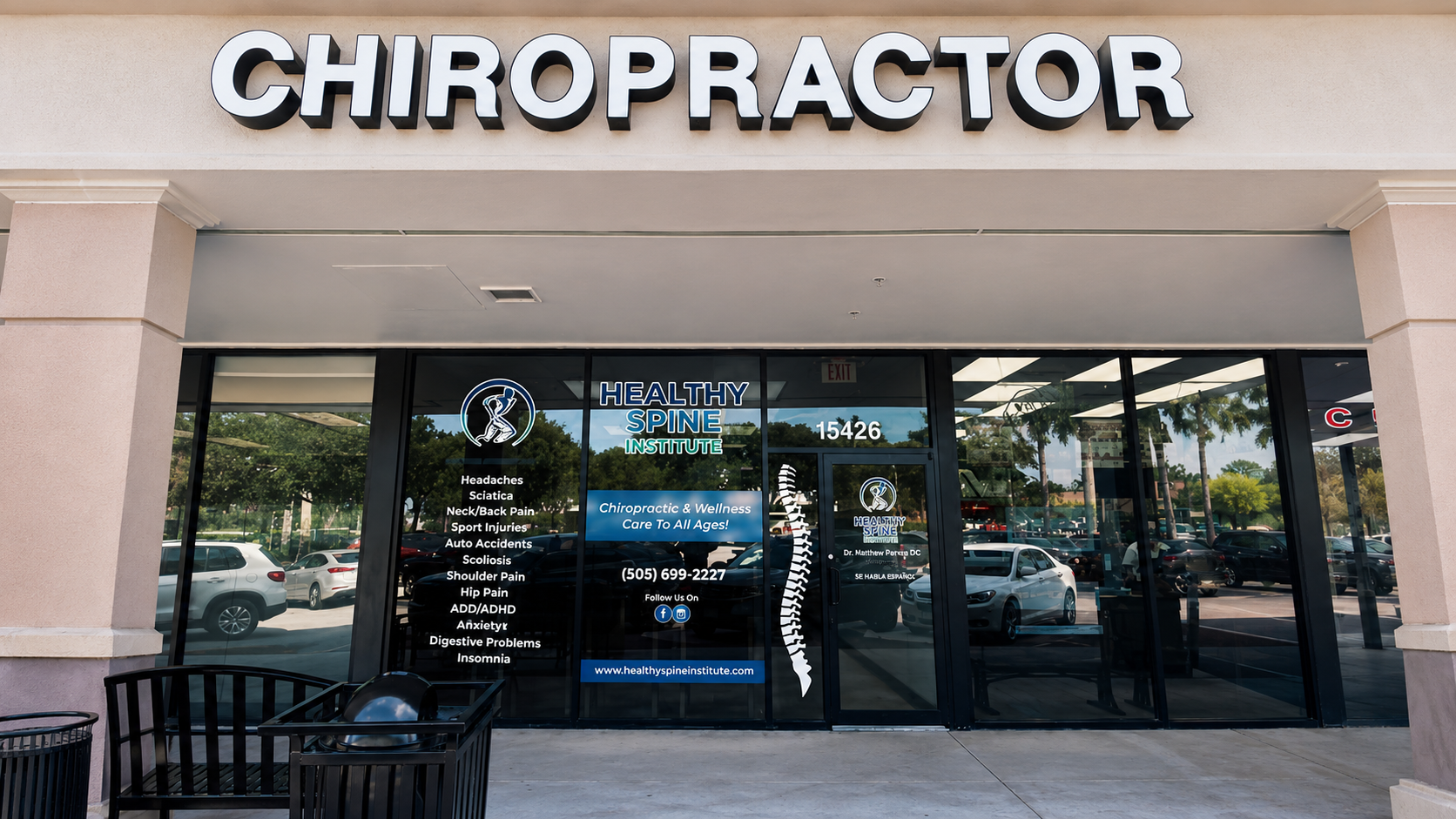
Visit our office
Healthy Spine Institute in Miami Lakes
Visit a professional, welcoming chiropractic office designed to make your next step feel clear and comfortable.
Healthy Spine Institute15426 NW 77th Court
Miami Lakes, FL 33016
(305) 699-2227
Office hours
Monday–Friday: 9:00 a.m.–1:00 p.m. and 3:00 p.m.–7:00 p.m.
Saturday: Closed